
Media, interviews & speaking
For enquiries about The Carpenter's Son, including media requests, speaking engagements, or general correspondence.
contact@warwickhowlett.comThe Carpenter's Son
In a world hungry for signs and wonders, one man lived a life far quieter than the stories that would one day be told about him. Book One of The Inheritor, the debut novel by Warwick Howlett.
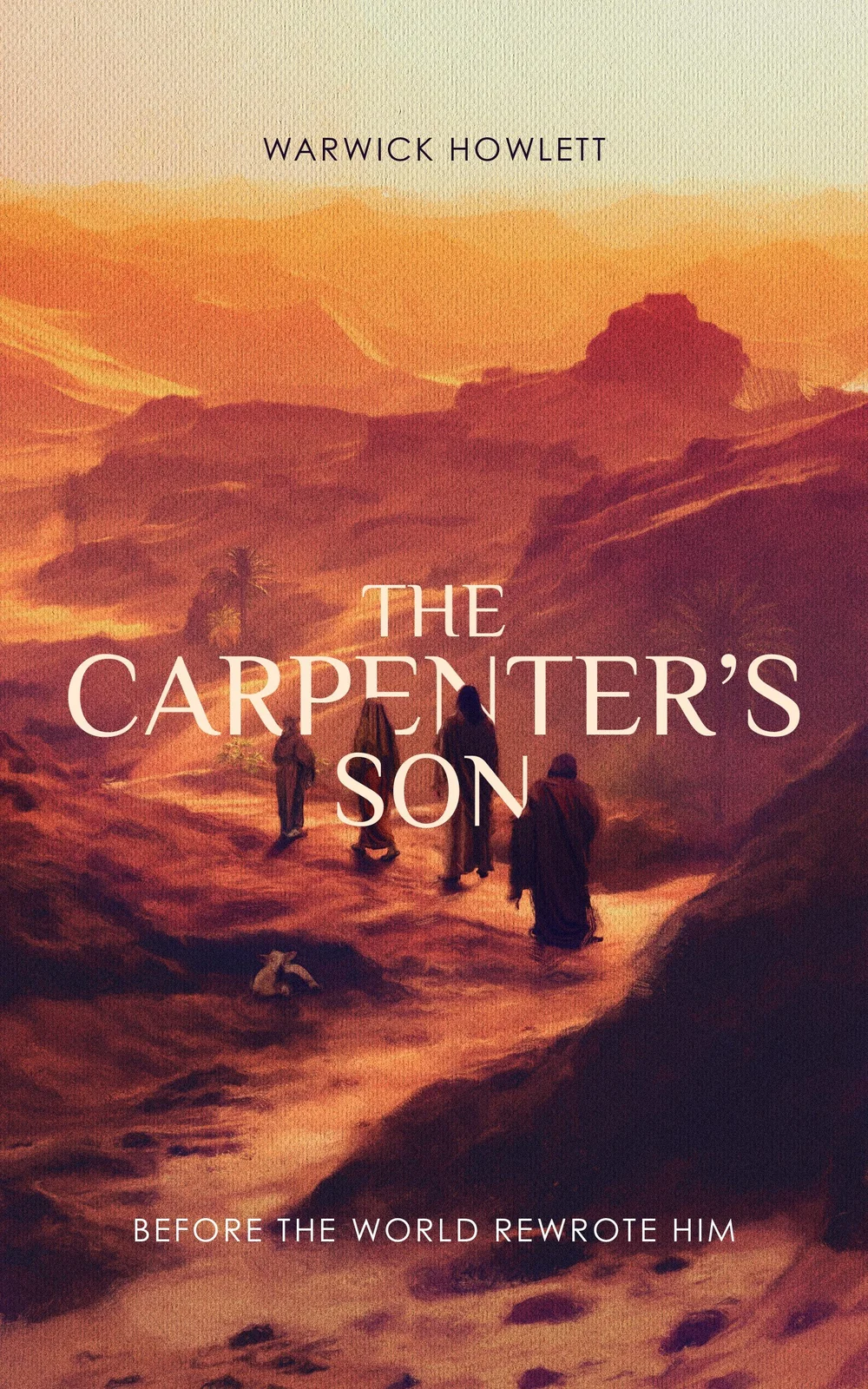
This is not the tale of miracles.
It is the story of the people who walk beside him, the Twelve who followed him, the woman he loved and the friend who kept the truth long after the world had written it.
From the crowded streets of Jerusalem to a hidden valley known only to a few, their lives unfold in the shadow of a myth still centuries away. What survives is not doctrine, but a thread of loyalty, grief, and love carried through generations in silence.
Some stories change the world. Others are buried to protect the people they belong to.
This is the one that stayed in the earth.
Not a retelling
Secular, character-driven and historically grounded. It does not follow the structure, theology, or intent of the Gospels.
A man, not a myth
No miracles, prophecies, or divine interventions, only a man navigating expectation, loyalty, danger, and the weight of being noticed.
For readers of history
For readers who enjoy historical fiction, political tension and emotionally precise storytelling, without expecting religious framing.
About the novel
What is the novel about?
The novel follows Jesus, Maggi, Philip, Andrew, and the small circle around them as they navigate the political, social, and personal pressures of first-century Judea. It is a story about power, loyalty, identity, and the cost of being seen, not a retelling of miracles, but an exploration of the human lives behind the names history preserved.
Is this a retelling of the Gospels?
No. The novel is secular, character-driven, and historically grounded. It does not follow the structure, theology, or intent of the Gospels. Instead, it imagines these figures as recognisable people shaped by their time, their relationships, and the forces pressing in on them.
Why write about Jesus and his followers in this way?
The aim is to return these figures to their human scale, to explore what it might have meant to live inside a story that later became myth. By focusing on their relationships, fears, loyalties, and choices, the novel seeks to understand the people rather than the legends.
Who is the book for?
Readers who enjoy historical fiction, character-driven narratives, political tension, and emotionally precise storytelling. It will appeal to those interested in the human side of well-known figures, without expecting religious framing.
How does it differ from other stories set in this period?
It avoids biblical language, miracle narratives, and devotional framing. Instead, it focuses on recognisable human dynamics, political pressure, and the emotional cost of leadership. The tone is restrained, unsentimental, and grounded in the lived reality of the era.
How does it portray Jesus differently?
The novel presents Jesus as a fully human figure shaped by his time, his relationships, and the pressures around him. There are no miracles, prophecies, or divine interventions, only a man navigating expectation, loyalty, danger, and the weight of being noticed. The story focuses on his choices, his influence on others, and the cost of the path he finds himself on, rather than on the theological narratives that later formed around him.

Warwick Howlett
I am an Australian writer based in Townsville. My work focuses on lived experience, emotional precision, and the quiet moments that shape a life. I was raised in a Christian family and guided by a lifetime of questions. I approach familiar stories with clarity and restraint.
Clarity over ornament. Humanity over myth.
coming soon
The Keeping
For twenty years, Sarah has lived a life of quiet discipline in a remote valley, her world shaped by her mother's chilling warning: some stories are doors, and some doors, once opened, can never be closed.
The lineage she carries is not a story for telling. It is a secret for keeping.
Sign up below and be first to read the teaser.